What happened
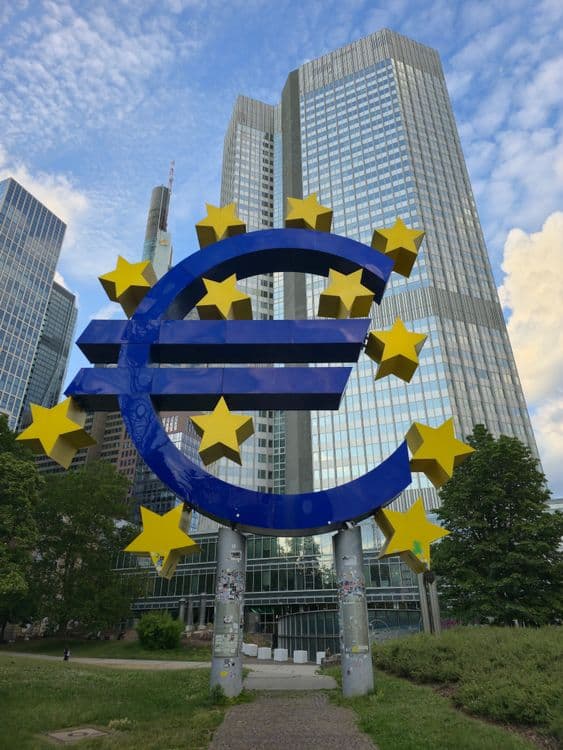
Euro area borrowing costs went up for the first time in three years when the European Central Bank raised its three key interest rates by 25 basis points — a basis point is simply one hundredth of a percentage point, so this is a quarter point move. The deposit facility rate, the rate that matters most because it is what banks earn for parking spare cash at the central bank, went to 2.25 percent. The main refinancing rate rose to 2.40 percent and the marginal lending rate to 2.65 percent, all effective from 17 June 2026.
The decision reversed the direction of travel that markets had grown used to. Since 2023 the ECB had been steadily cutting, easing policy as the post pandemic inflation surge faded. That cycle is now over. The trigger was the inflationary shock from the war in the Middle East, which drove energy costs sharply higher through the spring and fed into transport, freight and manufacturing prices across the bloc.
In its statement, the Governing Council said the rate rise was robust across a range of scenarios mapping out how the energy shock might evolve and how it could affect the medium term outlook for the euro area. In plain terms: the ECB judged that doing nothing carried more risk than acting, even though the shock might yet fade on its own.
Attention now turns to the next meeting on Thursday 23 July 2026, when Christine Lagarde will hold her press conference. Market pricing currently implies roughly an 88 percent probability that rates stay exactly where they are, at 2.25 percent. Investors, in other words, read June as a one off insurance move rather than the start of a long tightening campaign.
Why it matters
The ECB sets the price of money for around 350 million people across 20 countries. When it moves, the effects travel outward: through the rates banks charge for mortgages and business loans, through the returns savers get, and through the value of the euro against other currencies.
For households in France, Germany, Italy, Spain and beyond, a higher deposit rate feeds fairly quickly into new mortgage offers and variable rate loans. Anyone remortgaging this autumn will find that the cheapest deals have thinned out. Small businesses face the same squeeze on overdrafts and working capital lines, which is exactly the sort of drag that slows hiring.
There is a second, quieter channel that reaches Britain directly. Higher euro rates tend to support the euro against sterling. A firmer euro means British importers pay more for European goods — cars, machinery, wine, cheese — and British holidaymakers get fewer euros for each pound. Neither effect is dramatic on its own, but both nudge in the same direction.
The move also has signalling value. When one major central bank breaks ranks and starts raising while others hold, it tells markets that the energy shock is not being dismissed as noise. The Bank of England held at 3.75 percent in June with two of nine members voting for a rise, and the ECB decision gives those hawks a precedent to point at.
Explained simply
Think of the ECB as the thermostat for the entire euro area. When the room got too hot in 2022 it turned the dial right up. It had spent two years turning it back down — and then someone opened the oven door, and it had to nudge the dial up again.
Here is how the mechanism actually works. Commercial banks across the euro area keep spare cash at the central bank overnight. The deposit rate is what they earn on it. If the ECB pays a bank 2.25 percent for doing nothing at all, that bank is not going to lend money to you for less than that — it would be losing out. So the deposit rate acts as a floor beneath every other interest rate in the economy.
Raise the floor, and everything above it drifts up: mortgage rates, car loans, business overdrafts, the yields on government bonds. Borrowing gets more expensive, so people and firms borrow and spend a bit less. Less spending means shops and manufacturers cannot raise prices as freely. Inflation cools. That is the whole chain, and it works with a lag of roughly a year to eighteen months.
The catch is that the ECB cannot pump oil. The inflation it is fighting this time did not come from consumers spending too freely — it came from a war disrupting energy supply. Raising rates does nothing to refill a tanker. What it can do is stop that one off price shock from getting baked into wage demands and long term expectations, which is what turns a temporary spike into persistent inflation.
So the June rise is best understood as an anchor, not a brake. The ECB is not trying to cool a booming economy. It is trying to make sure that when Europeans think about what prices will do over the next five years, they still answer: around 2 percent.
What it means for you
If you hold a euro denominated mortgage or loan, the practical effect is straightforward. Variable rate mortgages tied to Euribor, the benchmark most euro area lenders use, will reprice upward at their next reset. On a 250,000 euro tracker mortgage, a quarter point rise adds roughly 30 to 35 euros a month, or about 400 euros a year.
For UK savers and investors the read across is indirect but real. European equity funds — think a Euro Stoxx 50 tracker or the European sleeve of your workplace pension — tend to wobble when rates rise, because higher rates make future company profits worth less in todays money and because bank borrowers come under pressure. European bond funds are more directly exposed: when yields rise, existing bond prices fall, so a euro government bond fund may show a small paper loss.
On the currency side, a stronger euro means a weaker pound in relative terms. If you are booking a European holiday for the autumn, locking in your euros now rather than later is a defensible move, though currency timing is never reliable. A one cent move on the pound to euro rate changes the cost of a 2,000 euro trip by roughly 15 to 20 pounds.
If you hold a global equity fund or a FTSE All World tracker, roughly 10 to 12 percent of it will typically sit in European stocks. This decision moves the needle, but it is not a reason to reshuffle your portfolio. It is a reason to understand why one slice of it might behave differently over the next few months.
The bigger picture
Central banks are supposed to look through supply shocks. The textbook says that if a war raises the oil price, you do not raise rates, because tightening cannot bring the oil back and you just deepen the downturn. The ECB has decided the textbook does not quite apply this time — and the reason is 2021.
Back then, policymakers on both sides of the Atlantic called the inflation surge transitory, waited, and were badly wrong. Prices climbed above 10 percent in parts of Europe and the eventual correction required brutally high rates. The institutional memory of that mistake is doing a lot of work in the June decision. Better a precautionary quarter point now than a scramble later.
What to watch next: the 23 July meeting, where a hold is widely expected, and euro area headline inflation prints through the autumn. With Brent crude now back below its pre war level after the US and Iran agreement, the energy shock that prompted this rise may already be unwinding. If it is, the ECB will have raised once and then stopped — an insurance premium paid, and not much more.


