What happened
Gold is changing hands at around 4,400 dollars an ounce in mid-August, an increase of roughly 8 percent in under two weeks. That is a violent move for an asset that many savers think of as boring, and it caps one of the most dramatic round trips the metal has produced in decades.
The starting point was an all-time high of 5,354 dollars an ounce reached in late January. From there gold fell steadily for five months, losing about 25 percent of its value and dropping below 4,000 dollars an ounce by the middle of July. Anyone who bought at the January peak was sitting on a quarter of their money gone within half a year.
The turn came in August, and the trigger was monetary policy expectations rather than anything happening in the gold market itself. As successive inflation readings in the United States came in cooler than forecast, traders cut the odds of another Federal Reserve rate rise to below 40 percent for September. Falling rate expectations are consistently the most reliable driver of the gold price.
Analysts are broadly constructive from here. UBS has forecast that gold will reach 5,000 dollars an ounce during the first half of 2027, which would bring it back within touching distance of the January record. That is a forecast rather than a fact, and the past seven months are a reminder of how quickly such projections can be overtaken by events.
Why it matters
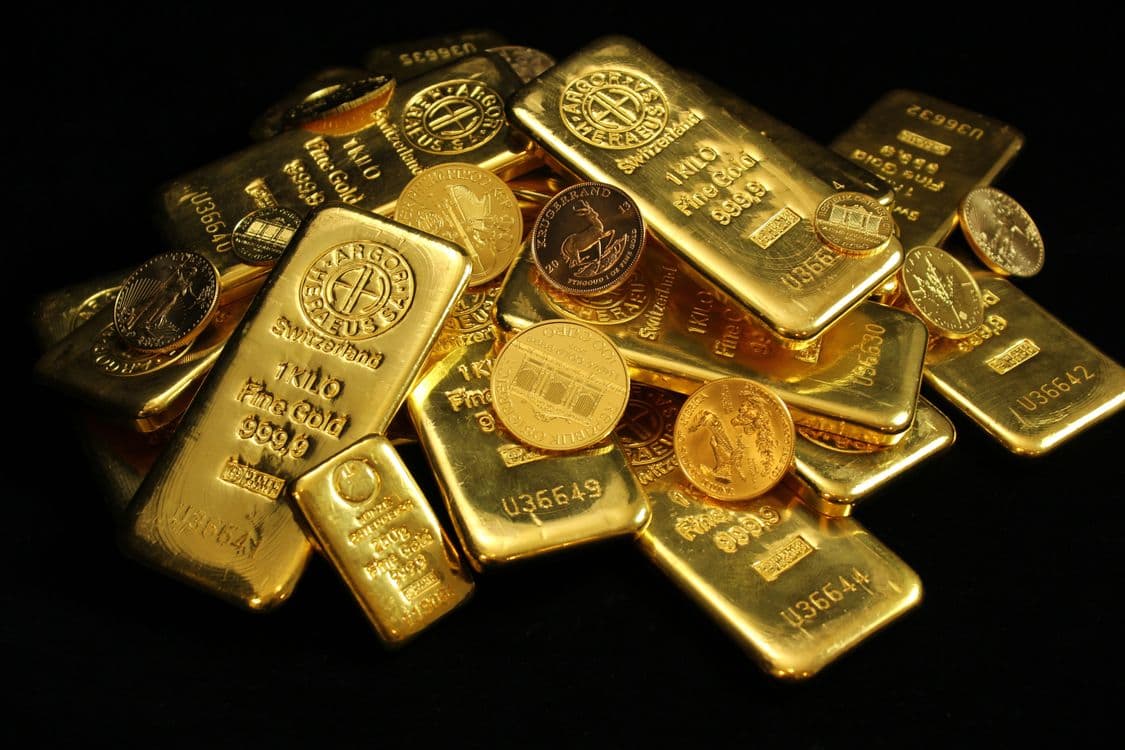
Gold occupies an unusual position in financial markets because it produces no income. A company pays dividends, a bond pays interest, a rental property pays rent. Gold sits in a vault and pays nothing. Its entire return comes from the price moving. That single characteristic explains almost everything about how it behaves.
Because gold pays nothing, the return available on safe alternatives is what determines its appeal. When interest rates are high or rising, holding gold means giving up a real, guaranteed yield elsewhere. When rate expectations fall, that sacrifice shrinks and gold becomes more attractive. This is why an American inflation report can move the price of a metal mined in Ghana and stored in Zurich.
The metal also serves as insurance. Investors buy it when they are worried about currency debasement, geopolitical conflict or a loss of faith in government finances. Central banks, particularly in emerging economies, have been steady buyers for several years as a way of diversifying reserves away from the dollar. That structural demand puts a floor under the price that did not exist in previous cycles.
For ordinary savers, the significance of the August rebound is more about what it says than what it earns. A sharp gold rally alongside record share prices is unusual, because the two usually move for different reasons. It suggests investors are simultaneously optimistic about company profits and cautious about the longer-term outlook for currencies and government debt.
Explained simply
Gold is a savings account that pays no interest. When the accounts that do pay interest start looking less generous, gold suddenly stops looking so silly.
Picture two options for 10,000 pounds. One is a savings account paying 5 percent, which hands you 500 pounds a year without you doing anything. The other is a bar of gold, which pays nothing but might be worth more or less next year. At 5 percent, the savings account is hard to argue with. Now imagine the rate drops to 2 percent. The gap in guaranteed income narrows to 200 pounds, and the case for holding something that might rise in value looks stronger.
That is the entire mechanism behind the August rally. Nothing changed about gold. What changed was the expected return on the alternatives. Traders decided the Federal Reserve was less likely to raise rates, the expected yield on cash and short-term bonds fell, and money moved into the metal.
The second driver is trust. Gold cannot be printed. Governments can create more currency, and companies can issue more shares, but the amount of gold in the world grows only as fast as it can be dug out of the ground, which is roughly 1 to 2 percent a year. When people worry that governments are borrowing too much or that currencies will lose value, they buy something whose supply cannot be expanded by decision.
The 25 percent fall between January and July is the essential counterweight to all of this. Gold is often described as a safe haven, which misleads people into thinking it is low risk. It is not. It is an asset that can lose a quarter of its value in five months, as it just did, and it offers no income to cushion the wait for a recovery.
What it means for you
Most UK investors who hold gold do so through an exchange traded commodity, or ETC, which can sit inside a Stocks and Shares ISA or a SIPP. These track the metal price closely and typically charge between 0.12 and 0.25 percent a year. Physical coins and bars are an alternative, but they carry dealer spreads of several percent on purchase and storage or insurance costs afterwards.
On sizing, a common approach among diversified portfolios is an allocation of 5 to 10 percent. The logic is that a slice that small can meaningfully reduce overall portfolio swings without exposing you to a repeat of the 25 percent drawdown in any way that would derail your plans. Going substantially above 10 percent turns a diversifier into a bet.
Be careful about gold mining funds as a substitute for the metal. Miners are leveraged to the gold price, meaning they tend to move further in both directions, and they carry company-specific risks around costs, debt and politics in the countries where they operate. They are a different investment, not a cheaper version of the same one.
The one thing worth avoiding is buying purely because the price has just jumped 8 percent. Chasing a two-week move in an asset that produces no income is speculation. If gold has a place in your plan it should be there permanently as a diversifier, bought steadily rather than after a rally.
The bigger picture
Gold in 2026 has been a story of extremes. A record in January, a 25 percent slide through the spring, and now a sharp August rebound. That volatility is itself informative: it reflects a market caught between competing forces, with high interest rates pulling the price down and central bank buying plus geopolitical anxiety pushing it up.
What to watch from here is the Federal Reserve. If the September meeting confirms that rates are on hold or heading lower, the tailwind behind the current move strengthens and the UBS target of 5,000 dollars becomes plausible. If inflation reaccelerates and the Fed turns hawkish again, the metal has already shown this year exactly how fast it can give the gains back.