What happened
Gold climbed to 4633.90 dollars per troy ounce on Friday morning, having opened December futures at 4577 dollars, up 0.1 percent on the Thursday close. It was the third straight weekly gain for the metal and it held comfortably above the 4500 dollar level that had capped it earlier in the summer. A troy ounce is the standard unit for precious metals and weighs about 31.1 grams, slightly more than the ordinary ounce used for groceries.
The immediate trigger came on Wednesday, when gold jumped more than 4 percent in a single session. The US Treasury had announced it would at least double its long dated debt buybacks in an effort to contain government borrowing costs, sending Treasury yields and the dollar sharply lower. Gold pays no interest, so when the return available on government bonds falls, the opportunity cost of holding a metal that produces no income falls with it.
A second driver is the state of US public finances. The national debt hit a record 40 trillion dollars this month, just five months after passing 39 trillion. The week before the buyback announcement, the 30 year Treasury yield reached a 19 year high, a sign that investors were losing patience with the trajectory of government borrowing. Gold tends to attract money precisely when confidence in paper claims on governments starts to wobble.
Energy has reinforced the move. The US campaign to intensify economic pressure on Iran has weakened hopes of a quick reopening of the Strait of Hormuz, keeping crude prices elevated. Higher oil feeds into inflation, and gold has a long history as a preferred hedge when investors expect the purchasing power of cash to erode. Currency market volatility, bond market stress and steady demand from central banks and retail buyers have all pulled in the same direction.
Why it matters
A gold price at these levels is a market wide statement about trust. Gold produces nothing, pays nothing and costs money to store, so a rising price means investors are willing to sacrifice income for security. When that trade is being made on this scale, it usually reflects genuine anxiety about government debt, currency stability or inflation rather than simple speculation.
The bond market connection is the most important one. For most of the past two decades, gold struggled whenever real yields rose, because holding cash or Treasuries paid you to wait. That relationship has been breaking down. Gold is now rallying alongside high nominal yields, which suggests investors are treating US debt itself as the risk rather than the safe alternative to it.
Central banks are a large part of the story. Official sector buying has been running well above the historical average for several years as reserve managers diversify away from dollar assets. That is price insensitive demand: a central bank rebalancing its reserves does not stop buying because the price went up, which removes one of the natural brakes on a rally.
For ordinary savers, the practical consequence is on inflation expectations. A gold price this high is the market telling you it expects the cost of living to keep rising faster than it did in the 2010s. That view has implications for how you hold cash, how you think about fixed rate savings, and how much of your pension is sitting in assets with no inflation protection.
Explained simply
Gold is the financial equivalent of a fire escape. Nobody uses it in normal times and it takes up space on the outside of the building, but when smoke appears in the stairwell everyone wants one, and the price of fire escapes goes through the roof.
Walk through the mechanism step by step. Most of your savings are claims on somebody else: a bank deposit is a promise from a bank, a bond is a promise from a government, a share is a claim on a company. Each promise is worth what the promise maker is worth, and each is denominated in a currency whose value is decided by policymakers.
Gold is different because it is nobody promise. It sits in a vault and it is exactly what it is, regardless of what any government or bank does next. That is its entire appeal and also its entire limitation: you cannot spend it easily, it generates no cash flow, and it does not grow.
So the price of gold is essentially a measure of how nervous the world is about the promises. When investors are relaxed, they prefer assets that pay them something and gold drifts. When they worry about too much government debt, unstable currencies or inflation eating their savings, they accept a zero yield in exchange for something no policymaker can dilute, and the price climbs.
That is what a 4600 dollar gold price is saying. Combine a 40 trillion dollar debt pile, a 19 year high in long bond yields, an oil supply threat and a dollar that fell 0.8 percent in a day, and you have a market that has decided to pay a lot for something dull and dependable.
What it means for you
If you already own gold, you are sitting on large gains and the honest question is whether your allocation has drifted too high. A common rule of thumb among UK advisers is 5 to 10 percent of a portfolio in gold as insurance. After a run like this, a position originally set at 5 percent may now be closer to 10, and trimming back to target locks in some of the move without abandoning the hedge.
If you do not own any and are tempted now, be clear about what you are buying. The cheapest UK route is a physically backed exchange traded commodity such as those from iShares, Invesco or WisdomTree, with ongoing charges typically between 0.12 and 0.25 percent a year, held inside an ISA or SIPP. That is far cheaper than buying coins, where dealer spreads of 3 to 5 percent are normal.
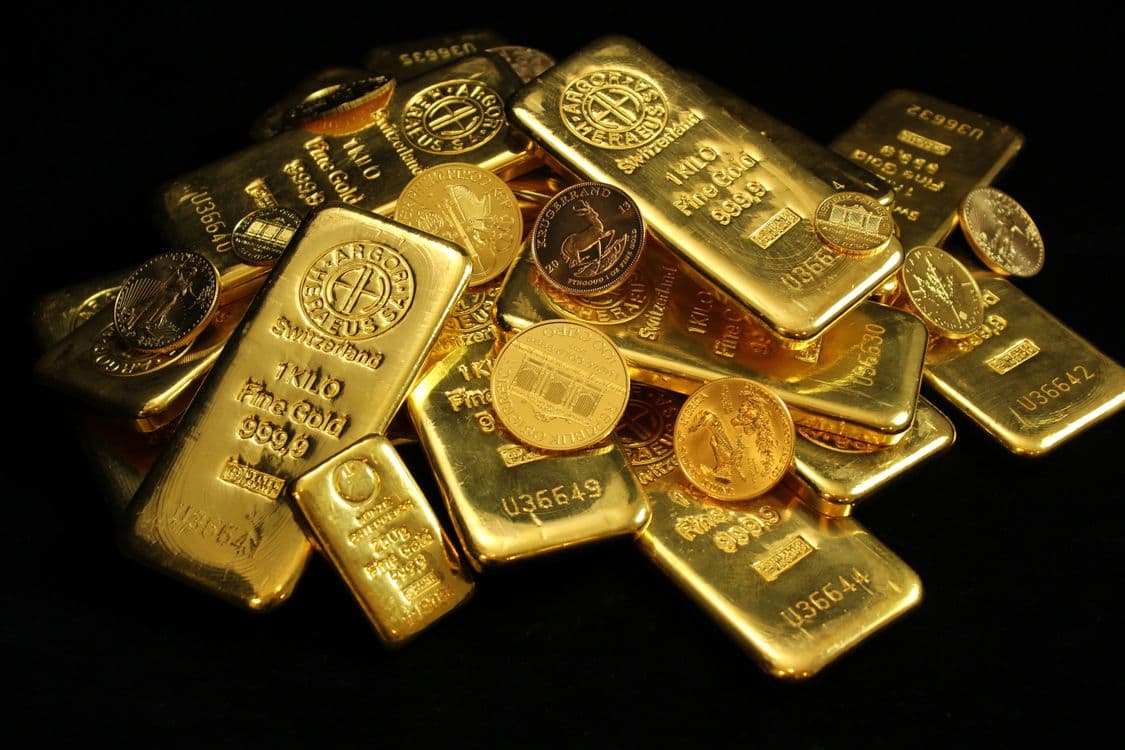
There is one genuinely useful UK quirk. British legal tender gold coins, specifically Sovereigns and Britannias produced by the Royal Mint, are exempt from capital gains tax for UK residents, and investment grade gold is exempt from VAT. For someone holding gold outside a tax wrapper, that exemption can be worth more than the higher dealing spread.
What gold cannot do is replace income. It pays nothing, so it will never fund a retirement on its own, and it can fall 20 percent in a quarter without anything fundamental changing. Treat it as ballast against the rest of your portfolio, not as the engine, and do not fund a purchase by cutting the pension contributions that carry tax relief.
The bigger picture
Gold spent the 2010s going almost nowhere while equities compounded. The turn came with the inflation shock of the 2020s and accelerated once central banks began rebuilding reserves outside the dollar system. What looks like a spike on a one year chart is in fact the latest leg of a multi year repricing driven by fiscal stress across the developed world.
The near term test is the Jackson Hole symposium from 27 to 29 August, where the new Federal Reserve chair Kevin Warsh delivers his first address. A hawkish message that real yields will stay high would take some heat out of the rally. A signal that the Fed is willing to tolerate higher inflation would do the opposite.
Beyond that, watch whether the Treasury buyback programme actually holds long yields down through November, and whether the Strait of Hormuz situation eases. Gold at 4600 dollars is priced for continued stress on both fronts, which means resolution on either would be the more dangerous surprise for holders.