What happened
Nvidia reported revenue of 96.2 billion dollars for its second quarter, a company record and an increase of 106 percent on the same three months a year earlier. Earnings came in at 2.22 dollars per share, more than double the 1.05 dollars posted a year ago. The results landed on 26 August 2026 and were immediately the most closely watched corporate numbers of the month.
Almost all of the growth came from one place. Data centre revenue — the chips and complete systems Nvidia sells to companies building artificial intelligence infrastructure, rather than to gamers — reached 89 billion dollars. That is up 117 percent on the year and 18 percent on the previous quarter alone. This one division now turns over more in three months than most companies in the FTSE 100 manage in a year.
The engine behind it is Blackwell Ultra, the newest generation of Nvidia AI systems. Revenue from hyperscale customers, meaning the very largest cloud providers such as Amazon, Microsoft and Google, more than doubled year on year. Sales to a wider group of AI startups, large enterprises and government backed sovereign AI projects rose 138 percent.
Profitability improved as well. Gross margin — the share of every dollar of sales left over after the direct cost of making the product — rose to 75.0 percent from 72.7 percent a year earlier. Chief executive Jensen Huang then went further than most had expected on the outlook, telling investors that revenue could grow roughly 70 percent in fiscal 2028, comfortably above what analysts had pencilled in.
Why it matters
Nvidia is no longer just a large company reporting good numbers. It has become the single most important read on whether the enormous global spending wave on artificial intelligence is still building or starting to crest. Because Nvidia sells the hardware everyone else needs, its order book is an early warning system for the whole sector.
That matters far beyond technology investors. Nvidia is among the largest constituents of the S&P 500, and the S&P 500 is the backbone of most global equity index funds. When Nvidia moves several percent, it drags the index with it, and the index sits inside millions of ordinary pension pots in Britain and elsewhere. A single company now carries an unusual amount of weight in the retirement savings of people who have never bought a share directly.
There is a second effect that is easy to miss. The customers buying these chips — the cloud providers and AI firms — are spending vast sums up front in the hope of revenue that arrives years later. Every strong Nvidia quarter is also a record of how much capital is being committed to a bet that has not yet paid off. That capital has to come from somewhere: retained profits, borrowing, or new share issuance.
Finally, this level of demand has real world consequences. Data centres consume large amounts of electricity and water, and the build out is already reshaping energy planning in the United States, Ireland and parts of Asia. The chip cycle has become an infrastructure story.
Explained simply
Imagine a gold rush where thousands of prospectors rush into the hills. Nvidia does not pan for gold. It owns the only shop selling shovels, and it has just raised the price.
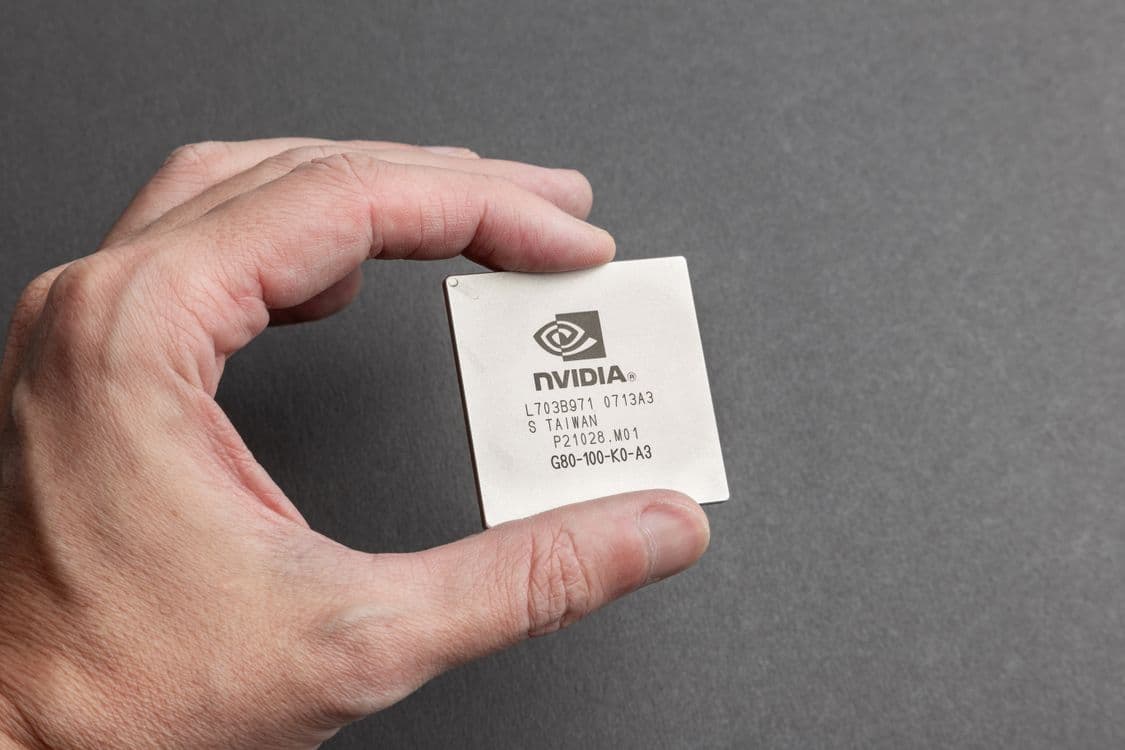
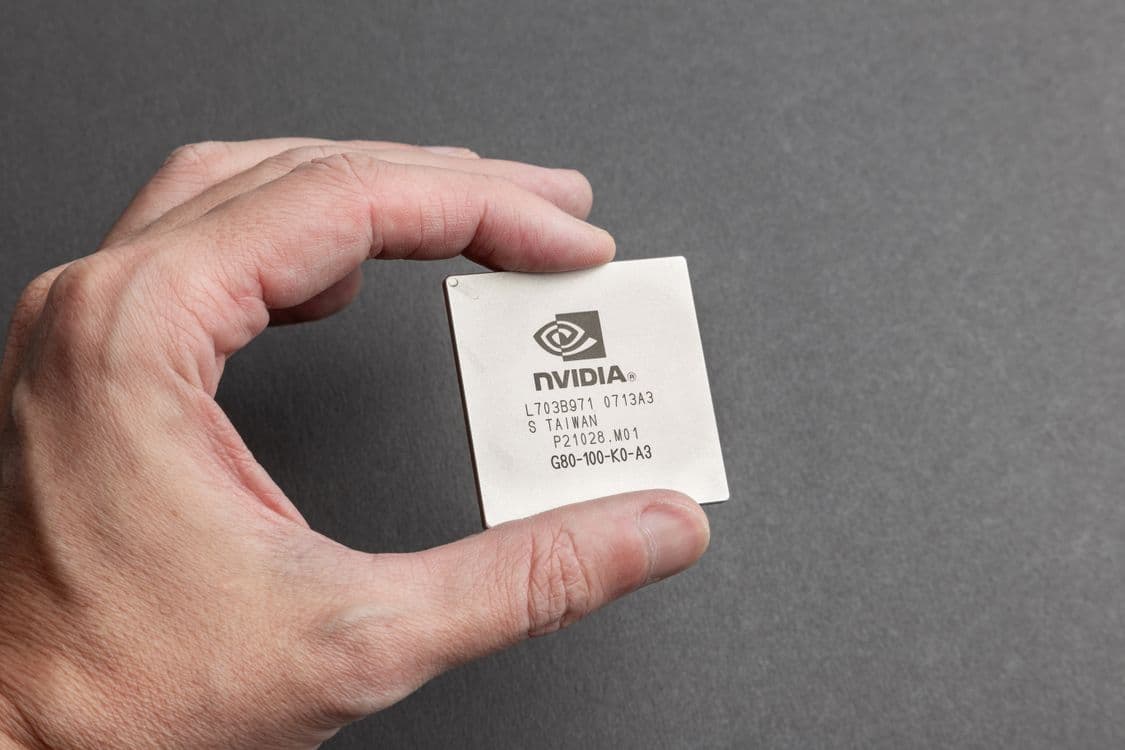
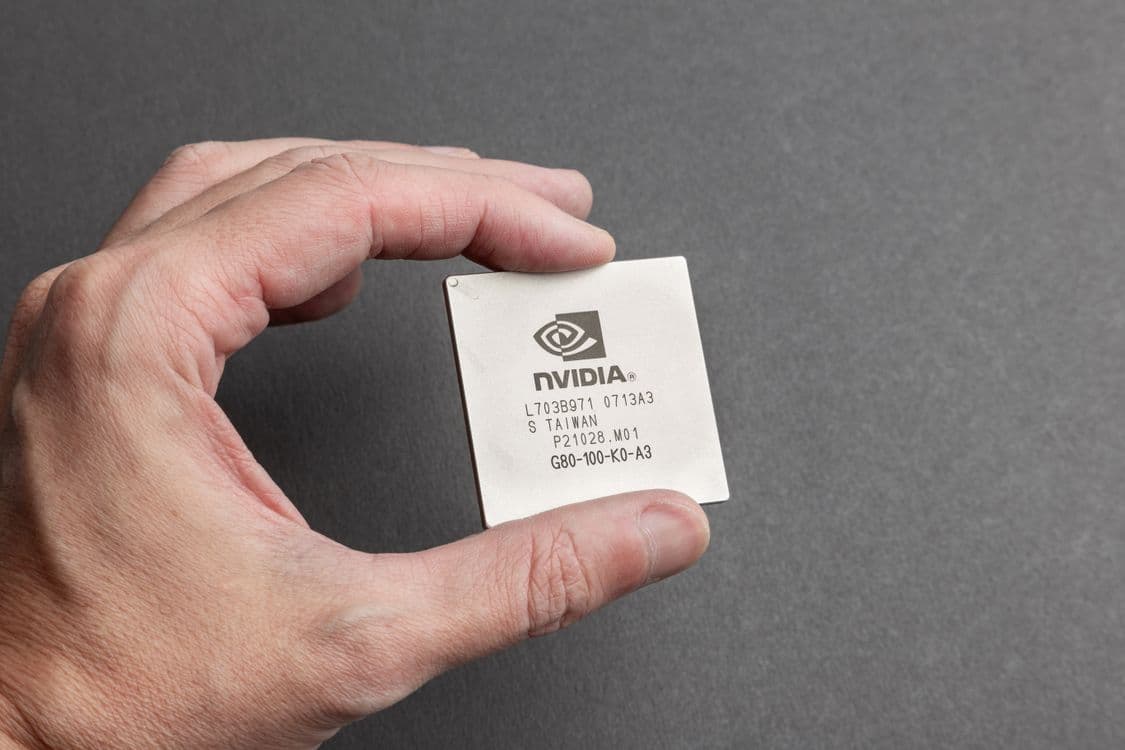
The prospectors here are the companies racing to build artificial intelligence products: chatbots, image tools, coding assistants, drug discovery models. None of them can build anything without enormous amounts of computing power, and that power comes from specialised chips called graphics processing units, or GPUs.
Nvidia designs the best of those chips and, crucially, also supplies the software that makes them usable. Switching to a rival is not simply a matter of buying a different box. It means rewriting years of work. That lock in is why Nvidia can charge what it charges and still keep a gross margin of 75 percent, a level almost unheard of in hardware.
So when Nvidia reports 89 billion dollars of data centre sales, what you are really reading is a tally of how many shovels the prospectors bought last quarter. The number tells you nothing about whether they will strike gold. It tells you exactly how convinced they are that they will.
The risk in that model is straightforward. Shovel sales are wonderful while the rush is on. If the prospectors run out of money, or the gold turns out to be thinner than hoped, the orders stop arriving all at once rather than tapering gently.
What it means for you
Check what you actually own. If you hold a global tracker such as an all world index fund, or a US index fund inside a stocks and shares ISA, Nvidia is very likely your largest single position — often five to eight percent of the whole fund. That is far more concentration than most people realise they have signed up for.
If that concentration makes you uncomfortable, the usual fix is not to sell everything but to add something that behaves differently. An equal weighted global fund, a FTSE 100 tracker, or a global bond fund will all dilute the technology exposure. None of this is a prediction that Nvidia will fall. It is simply about not having one company decide the outcome of your retirement.
For anyone paying into a workplace pension on autopilot, this is a good moment to log in and look at the default fund. Most defaults are heavily weighted to global equities, which now means heavily weighted to a handful of American technology names. Understanding that is worth more than any attempt to time the market.
And if you are tempted to buy individual shares on the back of results like these, remember that the good news is already in the price. The share reacts to the gap between what was reported and what was expected, not to whether the numbers were impressive in absolute terms.
The bigger picture
Technology has produced dominant suppliers before. Intel owned the personal computer era, Cisco owned the plumbing of the early internet, and both were once described as unassailable. Both eventually met competition, changing architectures, or simply a slowdown in the spending wave that had carried them.
What is different this time is scale and speed. Nvidia has gone from a specialist graphics company to one of the largest businesses on earth within a handful of years, and the guidance for 70 percent growth in fiscal 2028 implies the run has further to go.
The things to watch are the capital spending plans announced by the big cloud providers, any sign of customers designing their own chips in volume, and the electricity constraints now appearing around large data centre projects. Any one of those would show up in the Nvidia order book long before it shows up in the share price.