What happened
Bullion traded near 4330 dollars an ounce this week, having lost close to 6 percent over the previous three sessions to reach a two week low. The fall came as global government bond yields climbed to their highest since 2008 and the dollar strengthened, two conditions that historically weigh on the gold price at the same time.
The immediate driver was a bond market selloff fuelled by rising oil prices and renewed concern about government debt levels in the United States, Britain and France. Higher energy costs raise inflation expectations, and investors responded by pricing a smaller chance that central banks would cut rates and a larger chance that policy stays restrictive for longer.
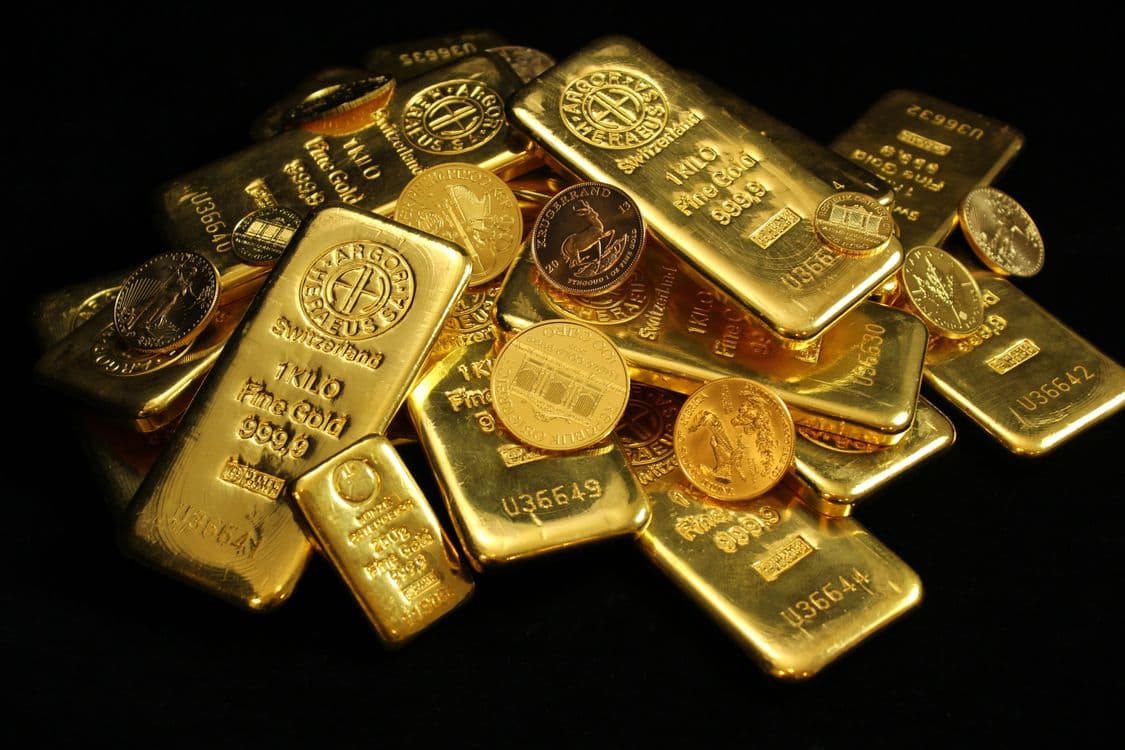
Bullion simply means gold in bar or coin form held as an investment rather than as jewellery. It pays no interest and no dividend. That single characteristic explains almost everything about how the price behaves.
The decline is striking against the longer run. Gold has spent much of the past two years making record highs, driven by central bank buying, geopolitical anxiety and the search for an asset that no government can print. A 6 percent three day fall does not undo that, but it is a reminder that the metal is not a one way bet.
Why it matters
Gold is the asset people reach for when they lose faith in everything else, which makes its price a rough gauge of financial anxiety. When it falls at the same time as oil rises and bond yields spike, that gauge is sending a specific message: this is a repricing of interest rates rather than a flight to safety.
The mechanism matters for anyone holding gold as portfolio insurance. Because bullion generates no income, its attractiveness depends entirely on what you give up by holding it. When a government bond pays 4.8 percent, holding a metal that pays nothing costs you 4.8 percent a year in forgone income. When bonds paid almost nothing, that cost was close to zero and gold looked cheap by comparison.
This also matters for savers indirectly, through pensions. Many multi asset and lifestyle funds hold a small commodities or gold allocation as a diversifier. Those allocations have performed extremely well for two years, and a sharp reversal in a diversifier is often more unsettling to investors than a fall in the main equity holding, because it was supposed to be the part that went up when other things went down.
Central banks are the other side of the story. Official sector buying, particularly from emerging market central banks diversifying away from dollar reserves, has been a persistent source of demand. That demand is price insensitive and strategic rather than tactical, which puts a floor under the market that did not exist in previous cycles.
Explained simply
Gold is a lock box with no interest paid on the contents. When the bank next door starts offering 5 percent, the lock box suddenly looks like an expensive place to keep your money.
Every investment competes with every other investment for the same pool of money. A share offers dividends and growth. A bond offers a fixed coupon. A savings account offers interest. Gold offers none of these. It offers only the possibility that the price goes up.
So the question an investor asks is what they give up by choosing gold. Economists call this the opportunity cost, and for gold the opportunity cost is roughly the real yield available on safe government bonds, meaning the yield after subtracting expected inflation.
When real yields rise, as they did this week, the lock box gets more expensive to keep shut. Some investors sell gold and buy bonds instead. Because a great deal of gold demand comes from exactly this kind of allocation decision rather than from industrial use, those flows move the price quickly.
The dollar adds a second layer. Gold is priced in dollars worldwide, so when the dollar strengthens, every non American buyer finds gold more expensive in their own currency and buys less. A stronger dollar and higher yields arriving together is the classic recipe for a gold selloff, and that is precisely what unfolded.
What it means for you
If you own gold through an exchange traded commodity fund inside a stocks and shares ISA, you have just seen a 6 percent drawdown in an asset you probably bought for stability. That is normal. Gold has historically had volatility comparable to equities, roughly 15 percent annualised, and describing it as a safe asset confuses uncorrelated with stable.
A sensible allocation for a retail investor who wants gold exposure is usually in the 5 to 10 percent range of a portfolio. Above that, the lack of income becomes a genuine drag over a long holding period. Below that, it will not meaningfully change your outcomes either way.
If you are considering buying physical gold rather than a fund, be aware of the costs that never appear in the headline price: dealer spreads of 3 to 5 percent on small coins, insurance, and storage. Sovereign coins such as Britannias are free of capital gains tax for United Kingdom residents, which is a real advantage, but the spread often eats more than the tax saving on short holding periods.
For most people, the more valuable move this week is unglamorous: check whether your easy access savings rate is still above 4 percent, since a delayed rate cutting cycle means cash is currently paying you a competitive real return with none of the volatility.
The bigger picture
Gold has had two extraordinary years. Central bank accumulation, persistent inflation and a run of geopolitical shocks pushed it to repeated record highs, and a pullback of this size after that kind of run is unremarkable in historical terms. The metal fell more than 40 percent between 2011 and 2015 after a comparable surge, so drawdowns are part of the pattern rather than a break from it.
The structural argument has not changed. Government debt burdens across developed economies keep rising, and the appetite among some central banks to hold fewer dollars is a slow moving trend rather than a trade. Both support demand over years rather than weeks.
What to watch next is real yields rather than the gold price itself. If ten year inflation protected yields keep climbing, gold will struggle regardless of the geopolitical headlines. If oil at 97 dollars pushes inflation expectations up faster than nominal yields, real yields fall and gold turns quickly. The Federal Reserve meeting later this month is the next real test.